



Amber is an extraordinary organic gemstone formed from ancient tree resin that hardened and transformed over millions of years. Unlike mineral gemstones, Amber originated from living trees, giving it a unique place in the natural gem world.
Ranging from creamy yellow and warm honey to deep gold, orange and brown, Amber can be transparent, translucent or opaque. Some pieces preserve ancient insects, leaves and plant fragments, creating remarkable natural records of prehistoric life.
Amber has long symbolised warmth, protection, vitality and renewal. In traditional and metaphysical practices, it is associated with emotional balance, confidence, creativity and positive energy.
* These meanings are based on traditional and metaphysical beliefs.
Ancient Warmth, Captured in Light
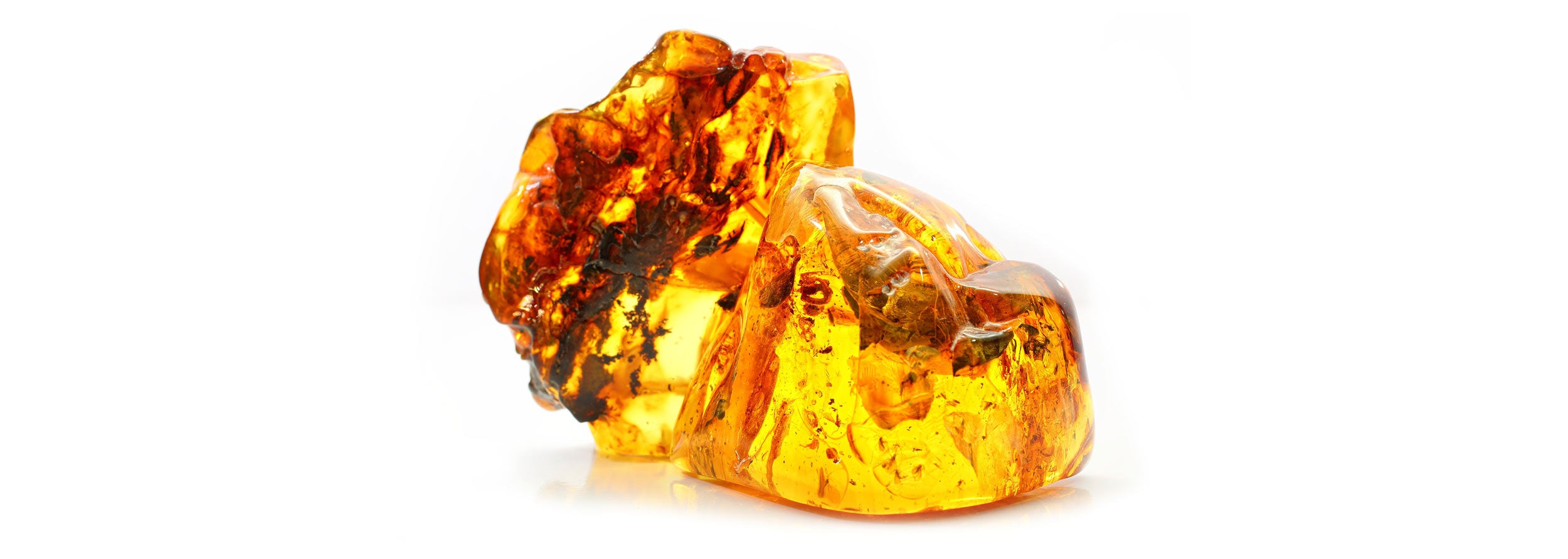
Golden Honey Amber is recognised for its transparent to translucent body and warm shades of honey, gold and golden orange.
Unlike the creamy opacity of Beeswax Amber, Golden Honey Amber allows light to pass through the material, creating a distinctive luminous inner glow. Clearer pieces may reveal natural patterns, bubbles, plant material or ancient inclusions preserved within the resin.
Its warm, sunlight-like appearance gives Golden Honey Amber a brighter, more radiant character than Beeswax Amber.
Meaning, Power & Healing Properties
Golden Honey Amber is associated with warmth, optimism, clarity, confidence, creativity and vitality.
In traditional and metaphysical beliefs, it is thought to encourage positive thinking, sharper focus and renewed emotional energy, making it especially meaningful during creative, intellectual or demanding periods.
Its golden glow has long symbolised life, sunlight and positive energy — a reminder to move forward with confidence and clarity.
Associated with: Clarity • Confidence • Creativity • Optimism • Vitality • Positive Energy
* These meanings are based on traditional and metaphysical beliefs.
Origin
Amber occurs in several parts of the world, with important deposits found around the Baltic region, Dominican Republic, Myanmar and Mexico.
Different origins can produce distinctive colours, inclusions and characteristics. Baltic Amber is especially renowned for its long history and abundance, while Dominican Amber is known for exceptionally clear material, unusual inclusions and rare colour effects.
Mohs Hardness: 2–2.5
Appearance: Clear, luminous, golden
Transparency: Transparent to translucent
Quiet Strength, Shaped by Time
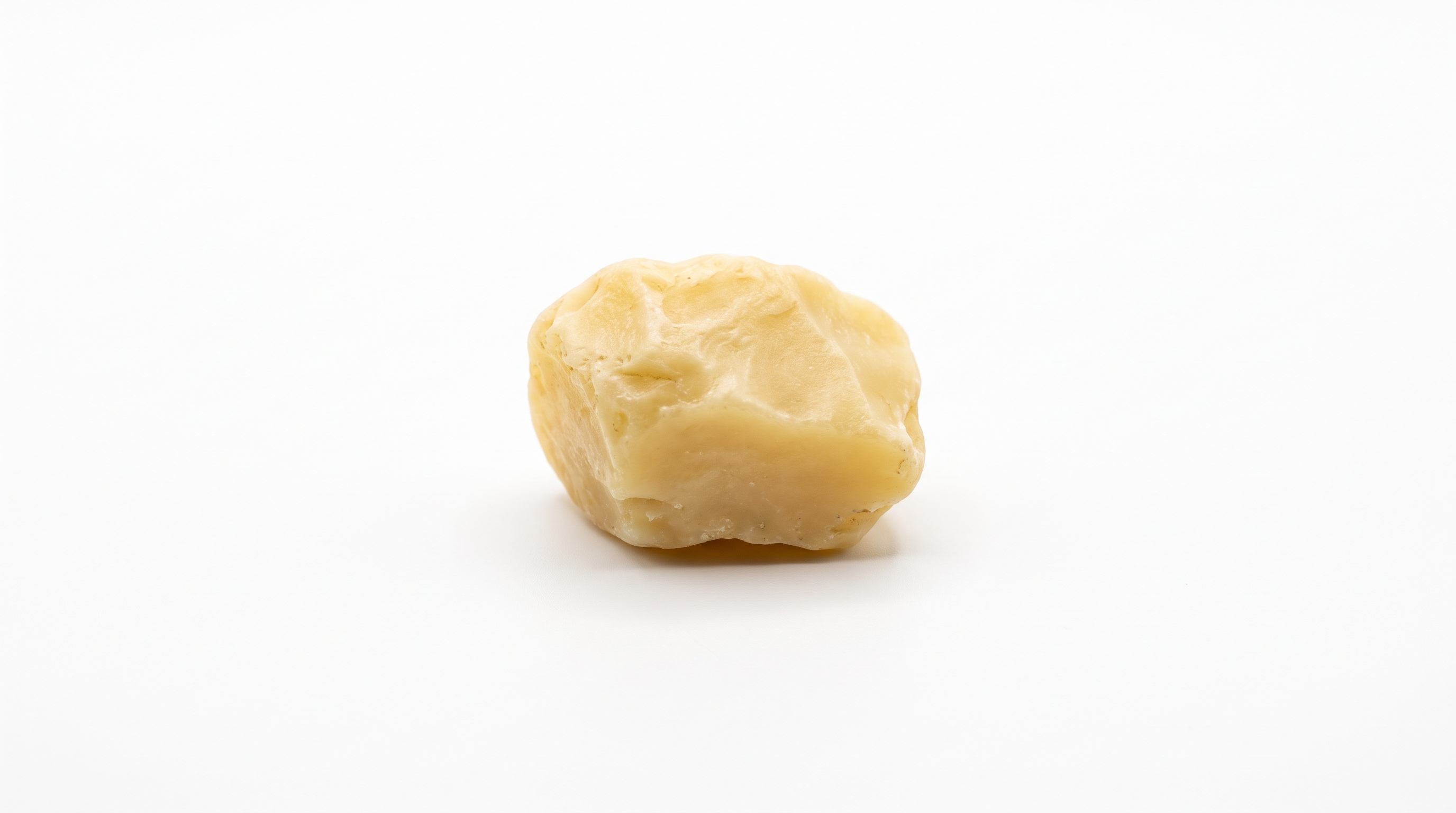
Beeswax Amber (蜜蜡) is a semi-translucent to opaque variety of Amber recognised by its creamy colour and soft, wax-like appearance. Despite its name, it contains no beeswax — the term refers entirely to its distinctive look.
Its cloudy character is created largely by countless microscopic bubbles that scatter light within the Amber, producing a soft, diffused glow rather than the clearer brilliance of Golden Amber.
Colours range from creamy ivory and butter yellow to rich honey and golden yellow. Particularly saturated yellow material is sometimes known in the trade as “Chicken-Fat Yellow” Beeswax Amber (鸡油黄蜜蜡).
Meaning, Power & Healing Properties
Beeswax Amber carries a gentle, grounded character linked with calm, protection, resilience and emotional stability.
In traditional and metaphysical beliefs, it is thought to encourage balance, ease negative thoughts and provide a greater sense of steadiness during periods of change or uncertainty.
Its ancient origin also makes it a fitting symbol of endurance and transformation — natural resin preserved and changed through millions of years.
Associated with: Calm • Grounding • Protection • Stability • Resilience • Inner Strength
* These meanings are based on traditional and metaphysical beliefs.
Origin
Beeswax Amber is particularly associated with Baltic Amber, originating from ancient deposits surrounding the Baltic Sea. Important sources include the Kaliningrad region of Russia and neighbouring Baltic areas.
Baltic Amber is approximately 40–50 million years old, making every piece a surviving fragment of an ancient natural world.
Mohs Hardness: 2–2.5
Appearance: Creamy, waxy, softly glowing
Transparency: Semi-translucent to opaque
Identifying Amber Under UV Light
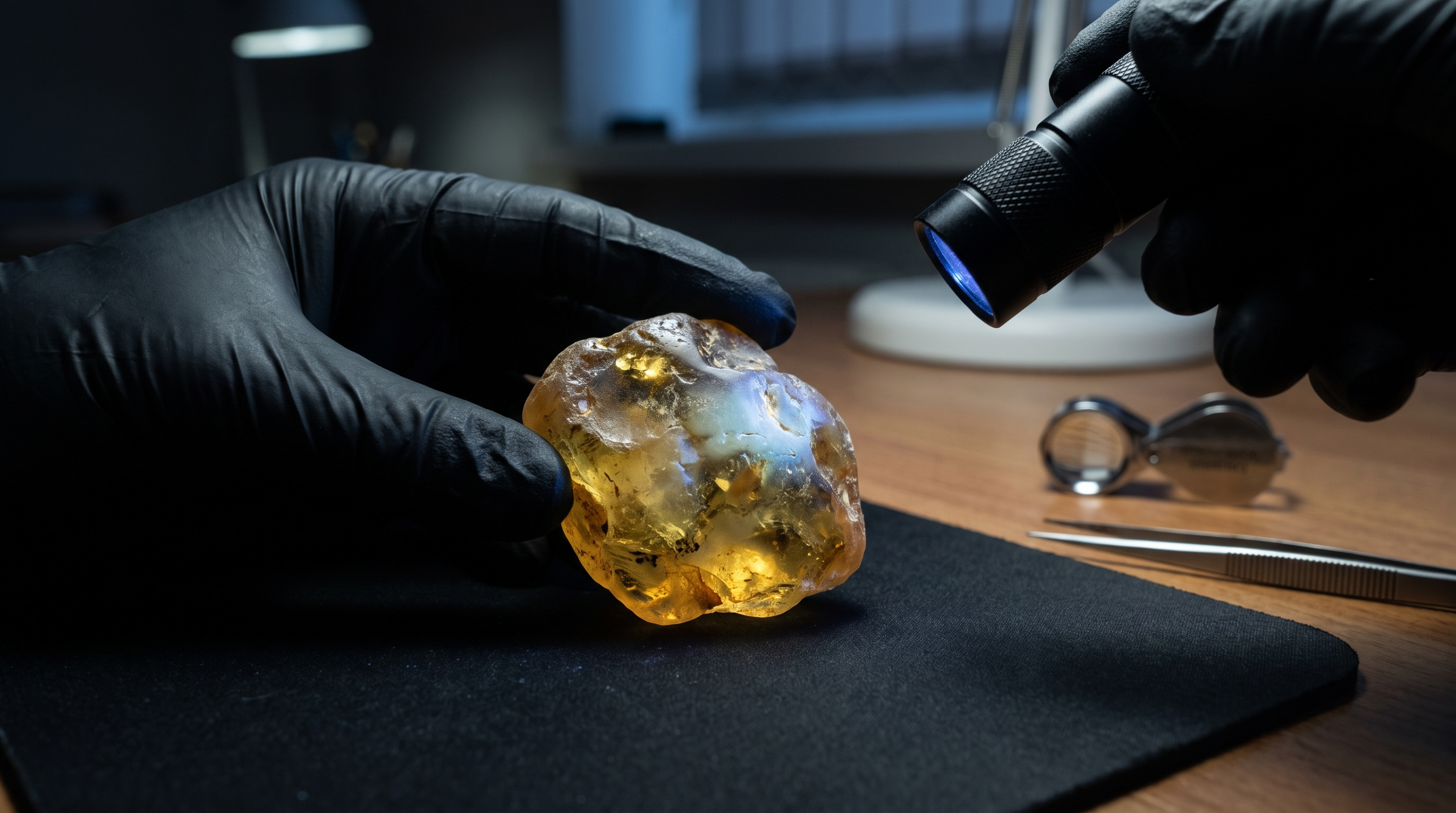
Gemologists often examine Amber under long-wave UV light, commonly around 365 nm. Many natural ambers show bluish-white, blue or greenish-blue fluorescence, sometimes appearing especially strong near the surface.
This reaction happens when UV light excites fluorescent compounds within the Amber. The colour, intensity and distribution of the fluorescence can provide useful clues about the Amber’s origin, possible treatments and authenticity.
However, blue fluorescence alone does not prove that Amber is genuine. Some treated materials and imitations can also fluoresce, so professionals may combine UV testing with microscopy, refractive index, specific gravity, FTIR or Raman spectroscopy.
In simple terms:
A blue or bluish surface glow under UV can be characteristic of natural Amber, but experts never rely on UV alone.
UNDER UV LIGHT
Natural Amber may reveal a striking blue to greenish-blue fluorescence under long-wave UV—one of several characteristics gemologists examine when assessing authenticity.