


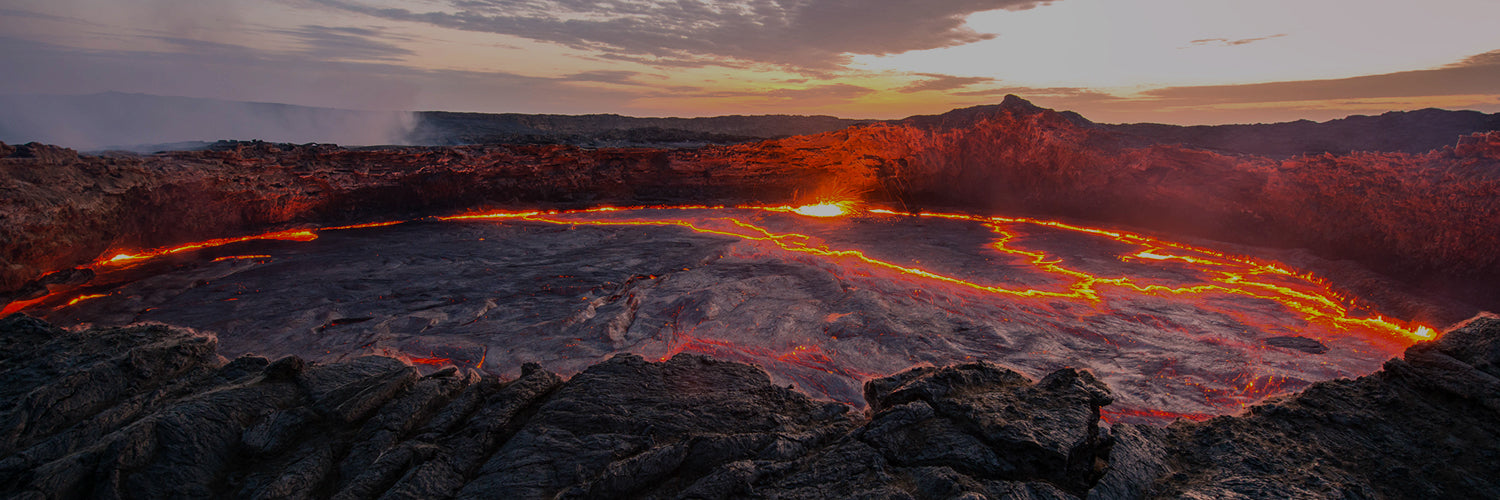
Both Black Lava and Obsidian are born from volcanic activity, shaped by intense heat and rapid change. Their fiery origins have made them powerful symbols of transformation, resilience and renewal.
Black Lava, with its rugged, porous texture, is traditionally associated with grounding, courage and perseverance. It is believed to help the wearer stay centred during periods of change and face challenges with greater stability and determination. Its porous surface can also absorb small amounts of essential oil, which is why Lava Stone is sometimes used in aromatherapy jewellery.
Obsidian, a natural volcanic glass formed when lava cools rapidly, is traditionally associated with protection, clarity and self-reflection. It is believed to help release negativity, encourage greater awareness and bring hidden thoughts or emotions into clearer perspective.
Together, they represent a simple idea: from heat, pressure and change can come strength, clarity and transformation — a reminder to stay grounded while continuing to move forward.
Associated with: Grounding • Protection • Courage • Clarity • Resilience • Transformation • Reflection • Renewal
Care: Black Lava and Obsidian should be handled with care. Clean gently with lukewarm water, mild soap and a soft cloth. Avoid harsh chemicals, sudden temperature changes and strong impacts. Obsidian can chip along sharp edges, while Lava Stone’s porous surface may absorb oils or liquids.
* These meanings are based on traditional and metaphysical beliefs.
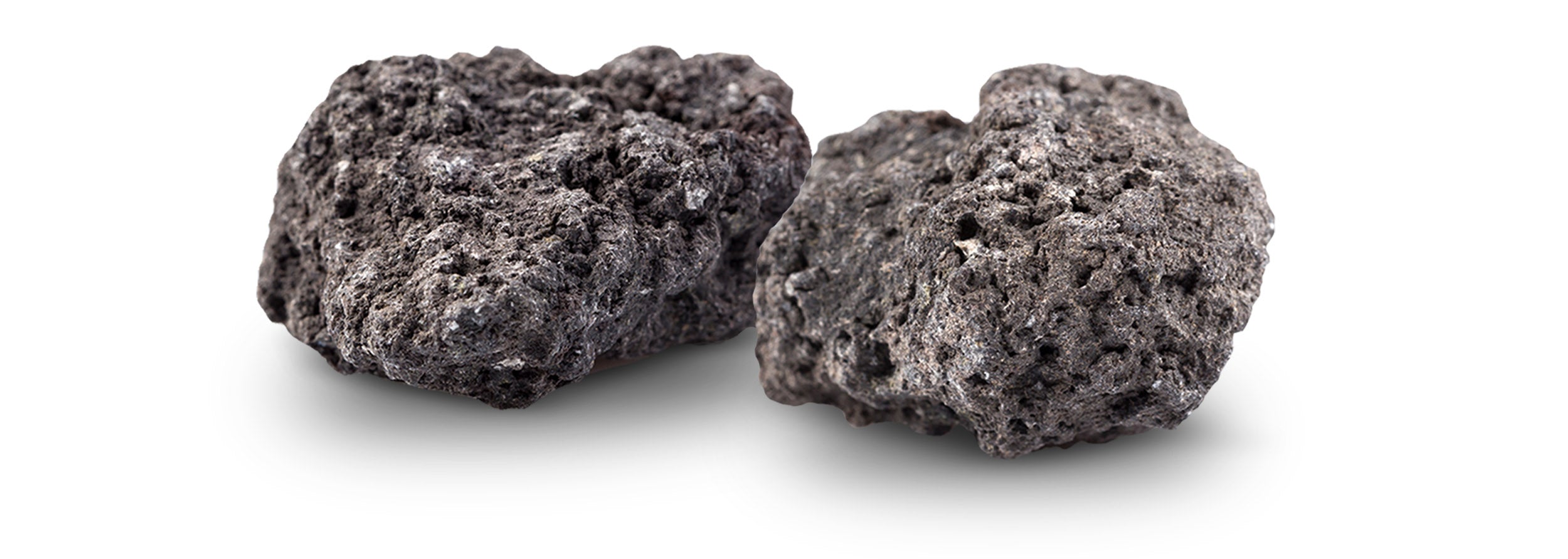
Black Lava is a Natural Volcanic Rock
Black Lava Rock begins as magma beneath the Earth’s surface. Once it erupts through a volcano, it becomes lava, which can reach temperatures of roughly 700–1,200°C (1,292–2,192°F) depending on its composition.
As the lava cools and solidifies, it can form dark volcanic rock with a naturally porous, matte texture. Basaltic Lava Rock commonly contains minerals such as pyroxene, olivine, plagioclase feldspar and magnetite.
Unlike traditional gemstones, Black Lava is valued less for brilliance and more for its raw, rugged character. Its rough texture and volcanic origin give it a strong, earthy appearance that works especially well in bold, understated jewellery.
Its natural look reflects the intense forces from which it was formed — heat, pressure and transformation shaped into something solid and enduring.
Mohs Hardness: Approx. 5–6
Rock Type: Volcanic / Igneous Rock
Main Minerals: Pyroxene, Olivine, Plagioclase Feldspar and Magnetite
Transparency: Opaque
Lustre: Dull to matte
Colours: Black, charcoal grey and dark brown
Distinctive Feature: Naturally porous surface formed by trapped volcanic gases
Major Sources: Found in volcanic regions around the world
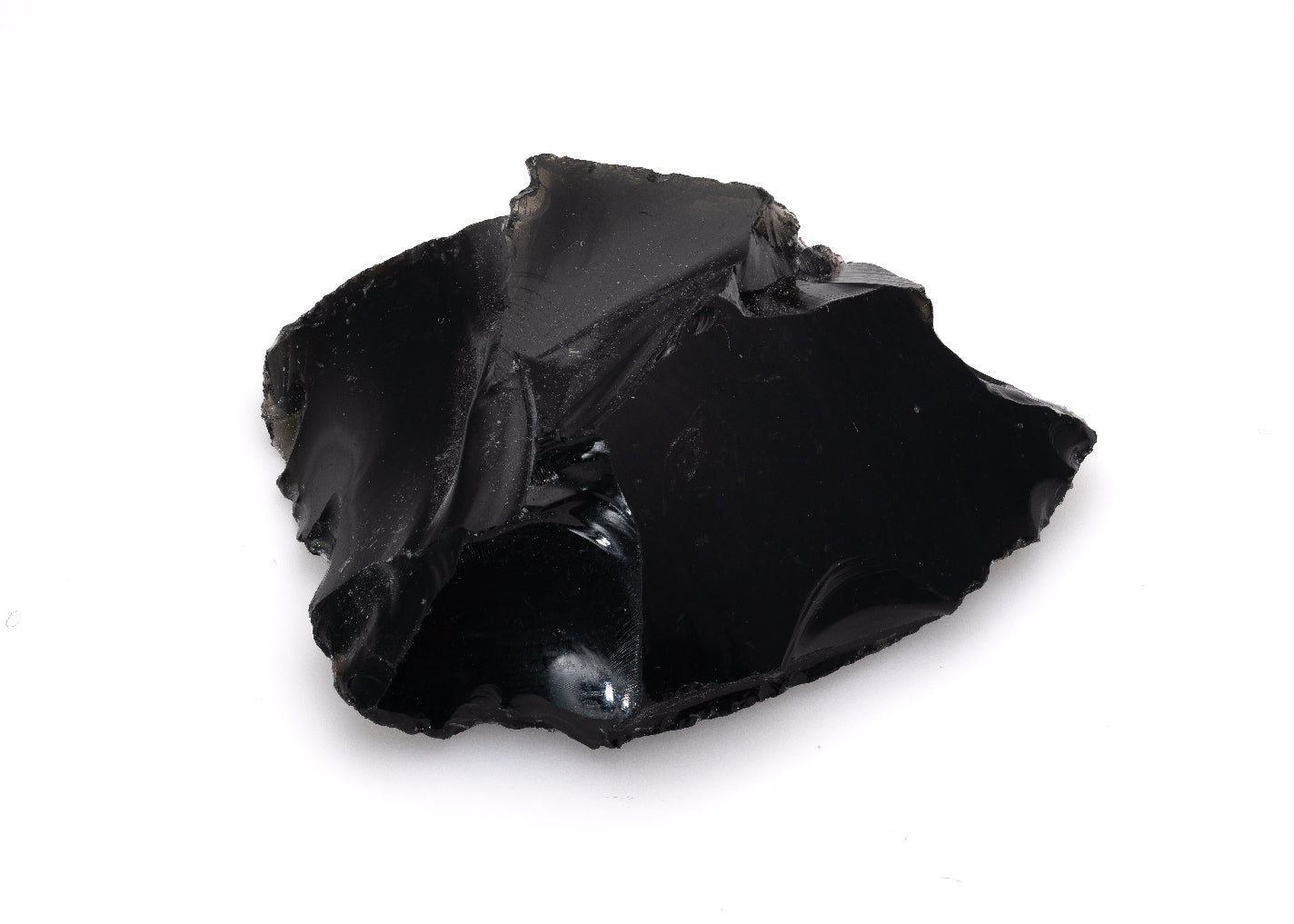
Black Obsidian is a Semi-Precious Gemstone
Black Obsidian is commonly classified in jewellery as a semi-precious gemstone, although geologically it is a natural volcanic glass rather than a true mineral. It forms when silica-rich lava cools so rapidly that crystals have no time to develop.
This rapid cooling gives Obsidian its distinctive smooth, glassy surface and deep black appearance. Depending on how it forms, some Obsidian can also show natural variations such as Snowflake, Mahogany or Golden Sheen patterns.
Black Obsidian has been used since ancient times for tools, blades, carvings and ornaments, prized for its ability to fracture into extremely sharp edges as well as its dark reflective beauty.
With a hardness of around 5–5.5 on the Mohs scale, Obsidian is suitable for jewellery but can chip or fracture if struck hard.
Mohs Hardness: 5–5.5
Material Type: Natural Volcanic Glass
Composition: Primarily Silicon Dioxide (SiO₂) with other mineral components
Transparency: Opaque to slightly translucent at thin edges
Lustre: Vitreous / glassy
Colours: Black, brown, reddish-brown, grey and naturally patterned varieties
Distinctive Feature: Glassy volcanic material formed by extremely rapid cooling of lava
Major Sources: Mexico, United States, Iceland, Italy, Japan and Armenia