


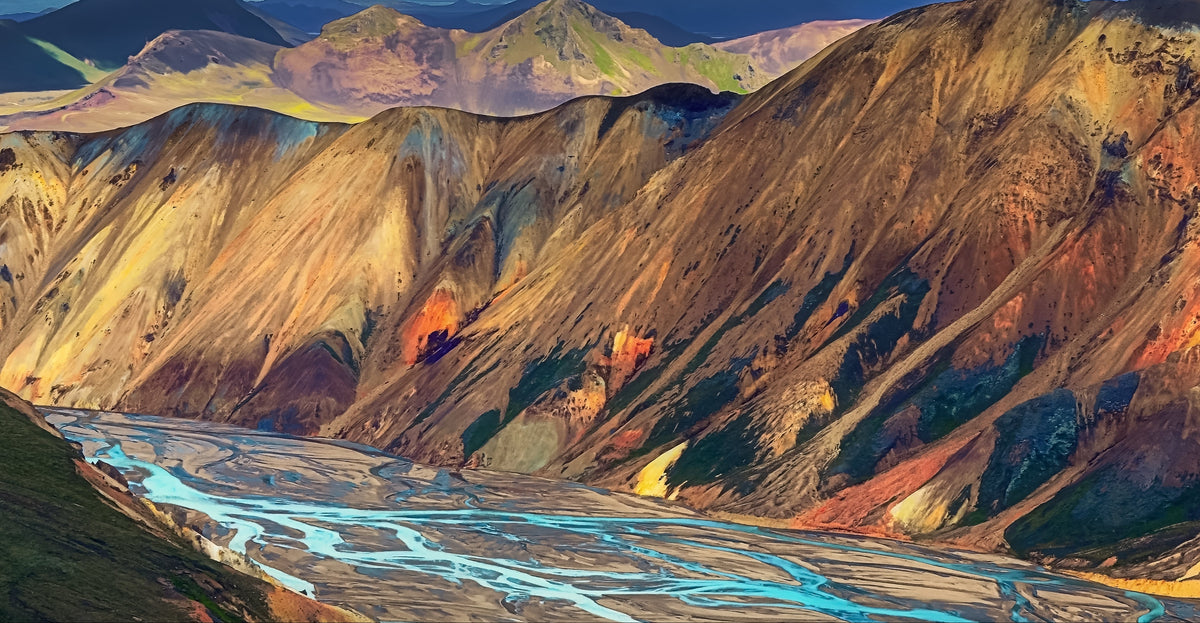
Opal — Nature’s Spectrum of Light
Opal is a naturally occurring hydrated silica mineraloid, prized for its remarkable diversity of colours and optical characteristics. Precious opal displays a distinctive phenomenon known as play-of-colour, produced by the diffraction of light through its microscopic silica structure.
Ethiopia and Australia are two of the world's most significant sources of precious opal, each producing gemstones with distinctive geological origins and physical characteristics.
Ethiopian Opal, particularly from the Wollo region, is admired for its vibrant play-of-colour and transparent to translucent varieties. Many Ethiopian opals are hydrophane, meaning their porous structure allows them to absorb water, which may temporarily alter their appearance.
Australian Opal is renowned for its diversity, including Black Opal from Lightning Ridge, Boulder Opal from Queensland and White Opal from Coober Pedy. These varieties differ in body tone, geological formation and the distribution of their spectral colours.
Although their geological origins differ, both Ethiopian and Australian precious opals share the same remarkable optical phenomenon — an ever-changing display of colour created by nature’s microscopic architecture.
Ethiopian Opal as a Semi-Precious Gemstone
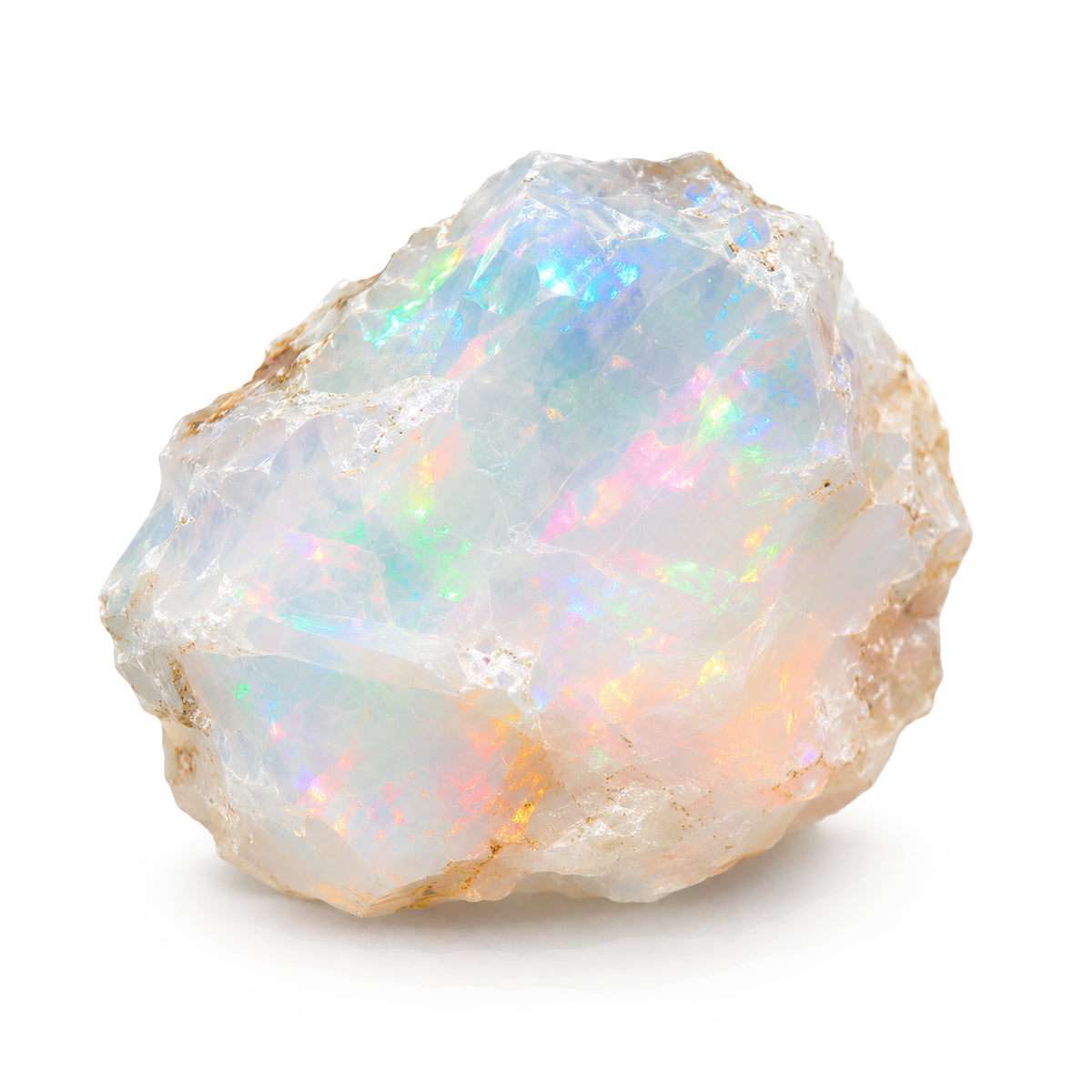
Ethiopian Opal is a semi-precious gemstone composed of hydrated amorphous silica, renowned for its extraordinary optical phenomenon known as play-of-colour.
This phenomenon occurs when light interacts with microscopic silica spheres arranged within the gemstone, producing shifting flashes of blue, green, yellow, orange, red and violet. The intensity and pattern of these colours vary depending on the internal structure of the opal and the angle from which it is viewed.
Ethiopian Opal is particularly admired for its remarkable translucency and vibrant spectral colours. Its body colour may range from milky white and pale cream to honey-yellow, brown or darker tones. No two stones display exactly the same play-of-colour, making each piece naturally distinctive.
Ethiopia emerged as a significant source of precious opal in the 1990s, following discoveries in the Shewa region. In 2008, the discovery of exceptional opal deposits in the Wollo region established Ethiopia as one of the world's leading sources of precious opal.
Many Ethiopian opals exhibit hydrophane properties, meaning they can absorb moisture and temporarily change in transparency, colour or appearance. This characteristic distinguishes them from many other varieties of opal.
With a hardness of approximately 5.5–6.5 on the Mohs scale, Ethiopian Opal is suitable for jewellery but requires gentle care. Prolonged exposure to water, oils, perfumes, chemicals and excessive heat should be avoided to preserve its natural beauty.
Mohs Hardness: 5.5–6.5
Mineral Family: Opal (Mineraloid)
Chemical Composition: Hydrated Silicon Dioxide (SiO₂·nH₂O)
Crystal System: Amorphous
Transparency: Transparent to opaque
Lustre: Vitreous to waxy
Optical Phenomenon: Play-of-colour
Typical Colours: White, cream, honey-yellow, brown and multicolour
Distinctive Characteristic: Often hydrophane
Birthstone: October
Major Sources: Wollo and Shewa regions, Ethiopia
Australian Opal as a Semi-Precious Gemstone
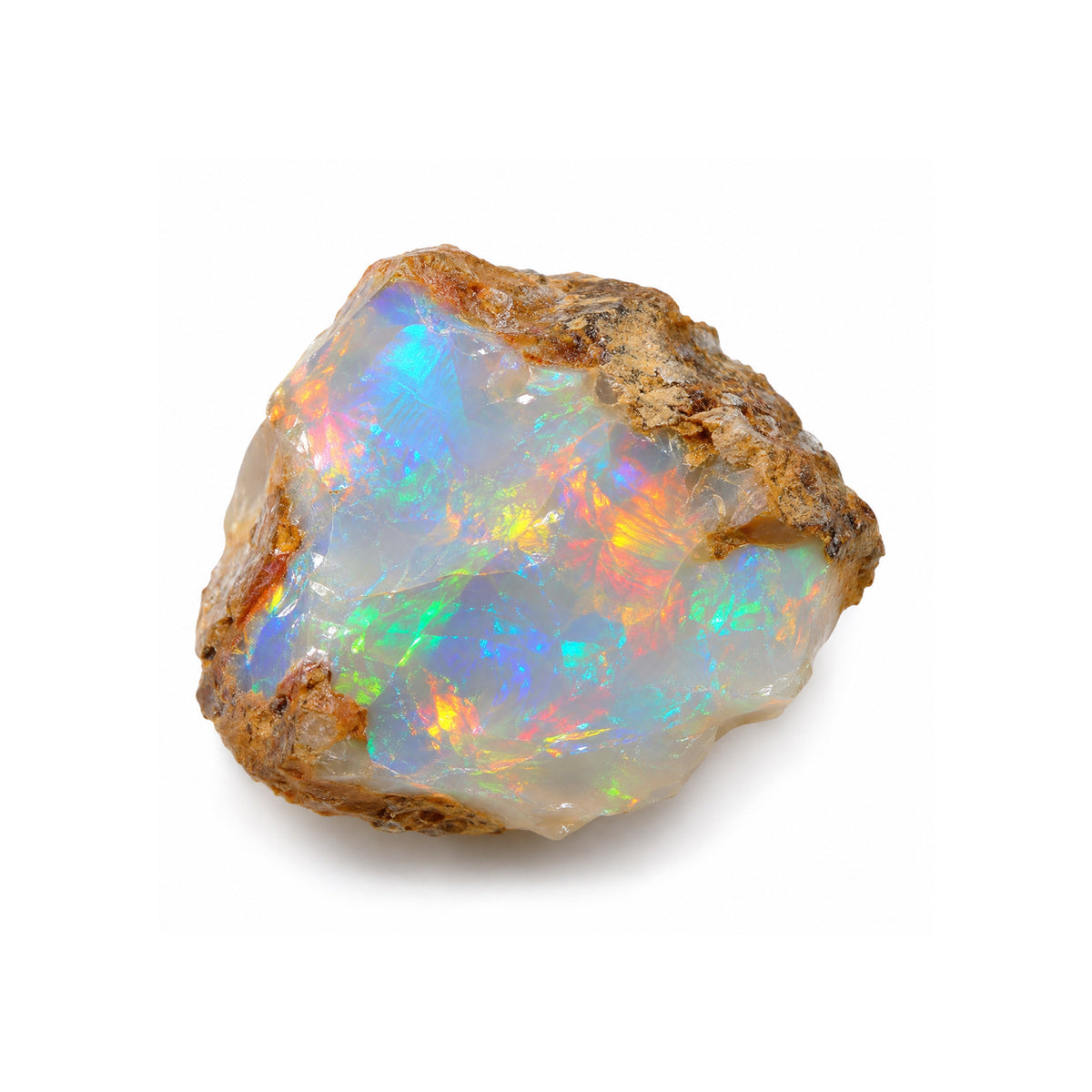
Australian Opal is a semi-precious gemstone composed of hydrated amorphous silica, celebrated for its extraordinary optical phenomenon known as play-of-colour.
This phenomenon occurs when light interacts with microscopic silica spheres arranged within the gemstone, producing vivid flashes of blue, green, yellow, orange, red and violet. The intensity and distribution of these colours depend on the internal structure of the opal, creating patterns that shift with light and movement.
Australian Opal is particularly admired for its exceptional colour patterns and diverse natural formations. Its varieties include Black Opal, prized for its dark body colour and brilliant spectral flashes; White Opal, recognised for its luminous, milky appearance; and Boulder Opal, which occurs naturally within ironstone.
Australia has a rich history of opal mining, with commercial discoveries dating back to the late 19th century. Renowned mining regions such as Lightning Ridge, Coober Pedy, Andamooka and the opal fields of Queensland have established Australia as one of the world's most celebrated sources of precious opal.
Unlike many Ethiopian opals, Australian Opal is generally non-hydrophane, meaning it is less prone to absorbing moisture and undergoing temporary changes in appearance.
With a hardness of approximately 5.5–6.5 on the Mohs scale, Australian Opal is suitable for jewellery but requires reasonable care. Exposure to excessive heat, sudden temperature changes, harsh chemicals and abrasive surfaces should be avoided.
Mohs Hardness: 5.5–6.5
Mineral Family: Opal (Mineraloid)
Chemical Composition: Hydrated Silicon Dioxide (SiO₂·nH₂O)
Crystal System: Amorphous
Transparency: Transparent to opaque
Lustre: Vitreous to waxy
Optical Phenomenon: Play-of-colour
Typical Colours: White, cream, grey, black and multicolour
Distinctive Characteristic: Generally non-hydrophane
Birthstone: October
Major Sources: Lightning Ridge, Coober Pedy, Andamooka and Queensland, Australia