



Dark, metallic and substantial in the hand, Hematite has a naturally solid presence. Its character is closely linked with focus, composure and the ability to remain grounded when pressure begins to build.
Associated with the Root Chakra, Hematite is believed to help steady scattered thoughts and encourage a more practical, disciplined approach to difficult situations.
It is also often connected with the balance between logic and creativity. Clear thinking does not have to limit imagination — it can help turn unusual ideas into something structured, useful and achievable.
Hematite therefore represents a very VARDE kind of strength: thinking clearly without losing the courage to think differently.
Associated with: Grounding • Focus • Stability • Confidence • Courage • Willpower • Clarity • Resilience
Care: Hematite should be kept relatively dry and protected from prolonged exposure to moisture. Clean gently with a soft, dry or slightly damp cloth and avoid harsh chemicals, acids, prolonged soaking and strong impacts.
* These meanings are based on traditional and metaphysical beliefs.
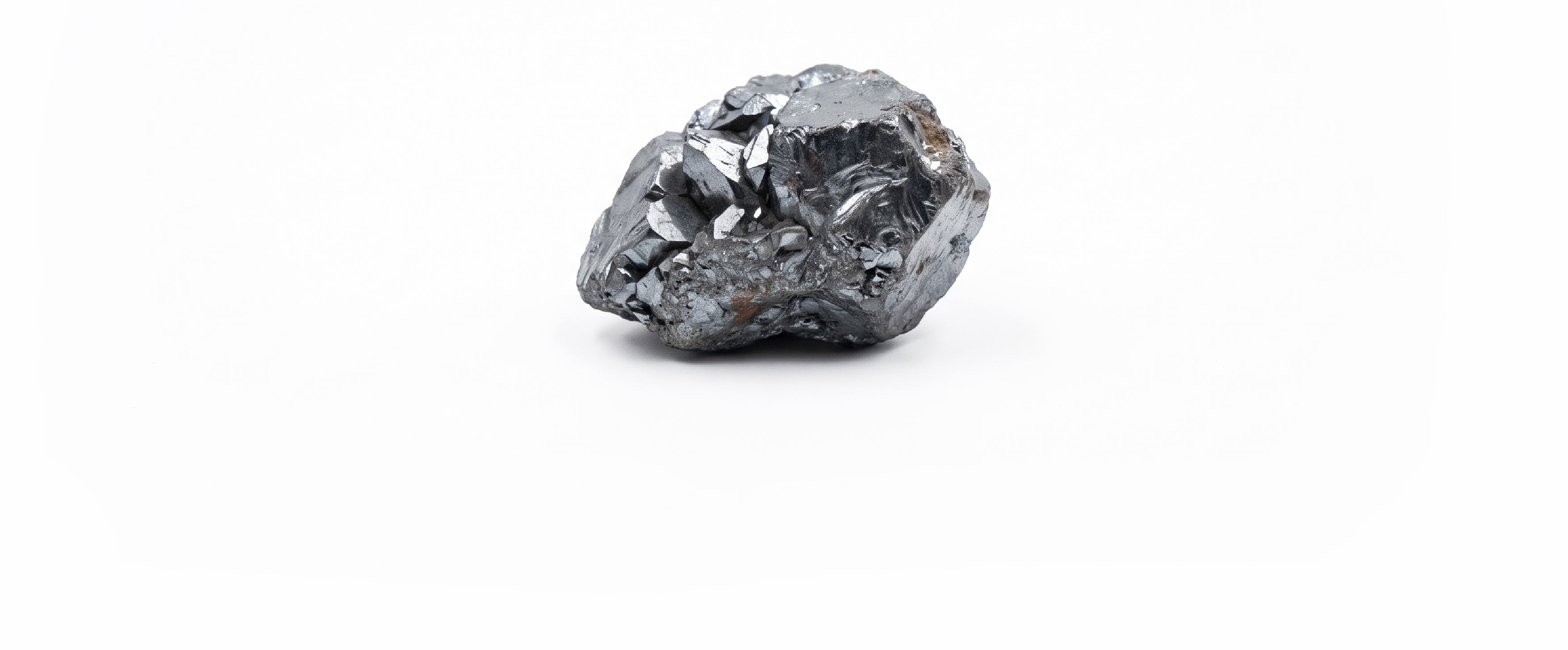
Hematite as a Semi-Precious Gemstone
Hematite is a semi-precious gemstone material and one of the most common iron oxide minerals, with the chemical formula Fe₂O₃. It is naturally dense and usually appears metallic grey to black when polished, while leaving a distinctive reddish-brown streak.
Pure Hematite contains about 70% iron by weight, which is why it is also an important source of iron ore. Its metallic lustre, substantial weight and dark reflective surface give it a very distinctive look in jewellery.
Hematite occurs worldwide in sedimentary, metamorphic and igneous rocks, with major deposits found in Australia, Brazil, China, India, South Africa and the United States.
With a hardness of around 5.5–6.5 on the Mohs scale, Hematite is reasonably durable but can still be brittle. Its combination of weight, metallic character and earthy origin makes it one of the most recognisable dark gemstone materials.
Mohs Hardness: 5.5–6.5
Mineral Family: Iron Oxide Mineral
Composition: Iron(III) Oxide — Fe₂O₃
Transparency: Opaque
Lustre: Metallic to sub-metallic
Colours: Steel grey, silver-grey, black and reddish-brown
Distinctive Feature: Metallic appearance with a characteristic reddish-brown streak
Major Sources: Australia, Brazil, China, India, South Africa and the United States