


Not every difficult situation needs an immediate reaction. Howlite carries a quieter philosophy — calm first, understand clearly, then respond.
Closely associated with the Crown Chakra, Howlite is believed to encourage patience, awareness and emotional balance. It is often linked with quieting an overactive mind and creating enough distance from frustration or anger to see the situation more clearly.
Its symbolism also connects strongly with maturity and personal growth. Life rarely follows every plan exactly, and Howlite represents the ability to adapt without losing composure.
It is a reminder that patience is not weakness. Sometimes, self-control is the stronger response.
Associated with: Calm • Composure • Patience • Wisdom • Awareness • Emotional Balance • Self-Control • Personal Growth
Care: Howlite is relatively soft and porous and should be handled with care. Clean gently with a soft, slightly damp cloth and mild soap when necessary. Avoid prolonged soaking, harsh chemicals, perfumes, high heat, steam and ultrasonic cleaners.
* These meanings are based on traditional and metaphysical beliefs.
Howlite is a Gemstone
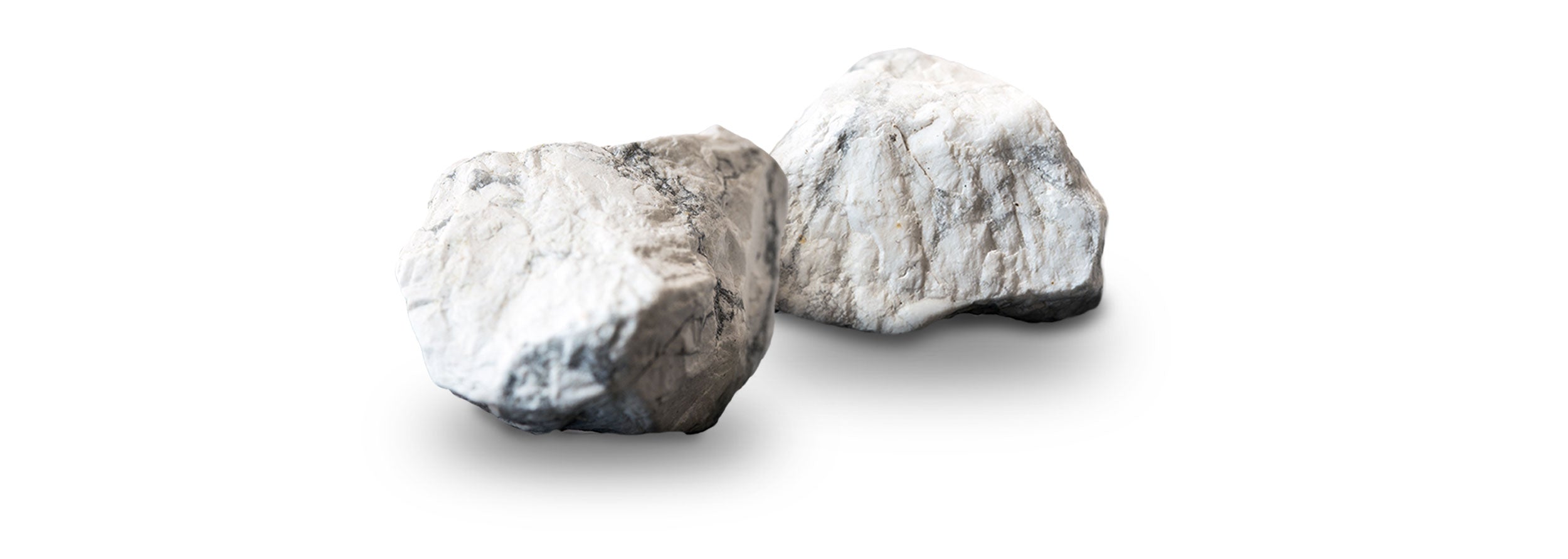
Howlite is a semi-precious gemstone composed of calcium borosilicate hydroxide. It typically forms in irregular white nodules, often with distinctive grey, black or brown veining that gives it a marble-like appearance.
Howlite was discovered in Nova Scotia, Canada, in 1868 by Canadian geologist and mineralogist Henry How. It was initially described as “silico-boro-calcite” before later being renamed Howlite in his honour.
Because Howlite is naturally porous, it absorbs dyes easily and is sometimes coloured to imitate gemstones such as Turquoise, Coral or Lapis Lazuli. For this reason, untreated natural Howlite is best recognised by its white to creamy body colour and contrasting natural veining.
With a hardness of approximately 3.5 on the Mohs scale, Howlite is relatively soft and requires more care than harder gemstones when used in jewellery.
Mohs Hardness: 3.5
Mineral Family: Borate Mineral
Composition: Calcium Borosilicate Hydroxide
Transparency: Opaque
Lustre: Dull to sub-vitreous when polished
Colours: White to cream with grey, black or brown veining
Distinctive Feature: Marble-like appearance with natural contrasting veins
Major Sources: Canada, United States, Germany, Turkey.