



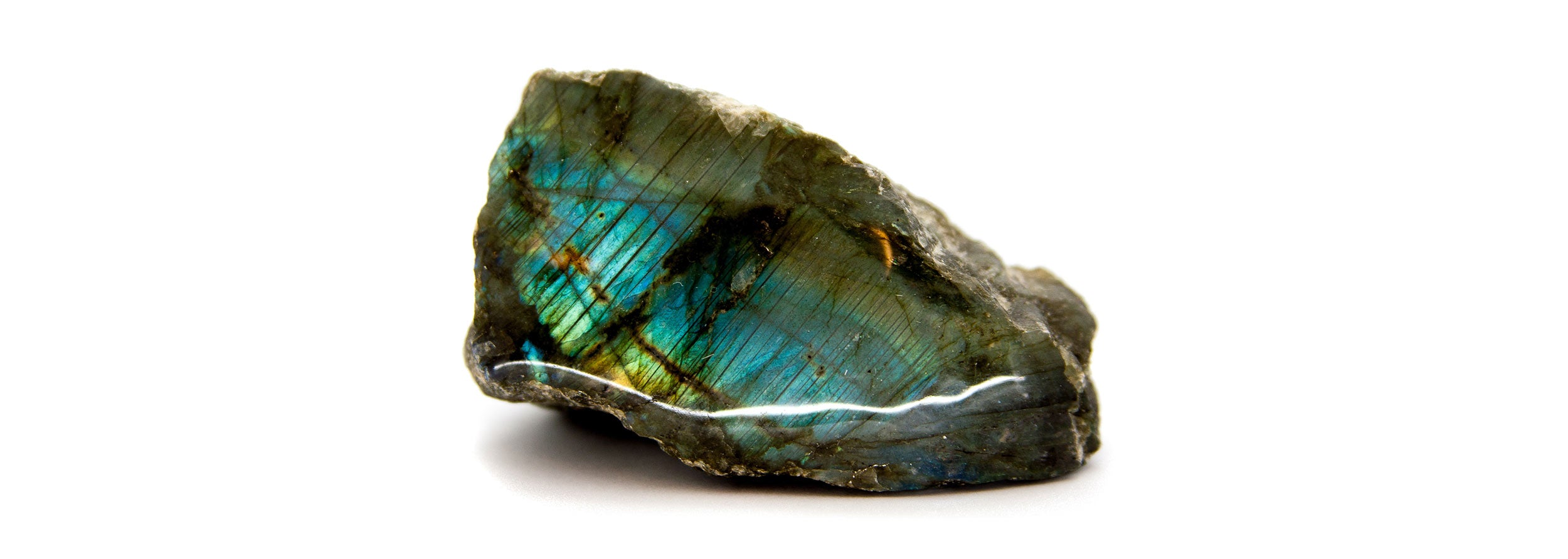
Few stones change character as dramatically as Labradorite. At one angle it can appear dark and subdued; with a slight movement, flashes of blue, green, gold and other colours suddenly emerge from within. That shifting light has made Labradorite a natural symbol of discovery, transformation and seeing beyond the obvious.
Often called the Stone of Magic, Labradorite is associated with intuition, protection and heightened awareness. It is believed to help clear mental distractions, strengthen inner guidance and encourage greater clarity during periods of uncertainty or change.
Labradorite is also closely linked with self-discovery and personal growth. Its hidden flashes reflect the idea that there is often more beneath the surface — encouraging the wearer to recognise patterns, trust their instincts and move forward with greater confidence and purpose.
Associated with: Transformation • Intuition • Protection • Clarity • Awareness • Confidence • Growth • Self-Discovery
Care: Labradorite should be protected from strong impacts and harsh chemicals. Clean gently with lukewarm water, mild soap and a soft cloth. Avoid prolonged soaking, high heat, steam and ultrasonic cleaners.
* These meanings are based on traditional and metaphysical beliefs.
Labradorite is a Semi-Precious Gemstone
Labradorite is a semi-precious gemstone from the Plagioclase Feldspar family, first recorded in Labrador, Canada, in 1770. It is famous for labradorescence — flashes of blue, green, gold and sometimes violet that seem to move across the stone as it catches the light.
A popular Inuit legend connects these luminous colours with the Northern Lights, adding to Labradorite’s long-standing sense of mystery. Its natural body colour is typically grey to dark grey, creating a dramatic contrast with the brilliant flashes within.
With a hardness of approximately 6–6.5 on the Mohs scale, Labradorite is durable enough for jewellery with reasonable care. Important sources include Canada, Finland, Madagascar, Russia and the United States.
Its remarkable optical effect and naturally individual patterns ensure that no two pieces look exactly alike.
Mohs Hardness: 6–6.5
Mineral Family: Plagioclase Feldspar
Composition: Calcium Sodium Aluminosilicate
Transparency: Translucent to opaque
Lustre: Vitreous to pearly
Colours: Grey to dark grey with flashes of blue, green, gold and violet
Distinctive Feature: Labradorescence — shifting flashes of colour across the surface
Major Sources: Canada, Finland, Madagascar, Russia and the United States