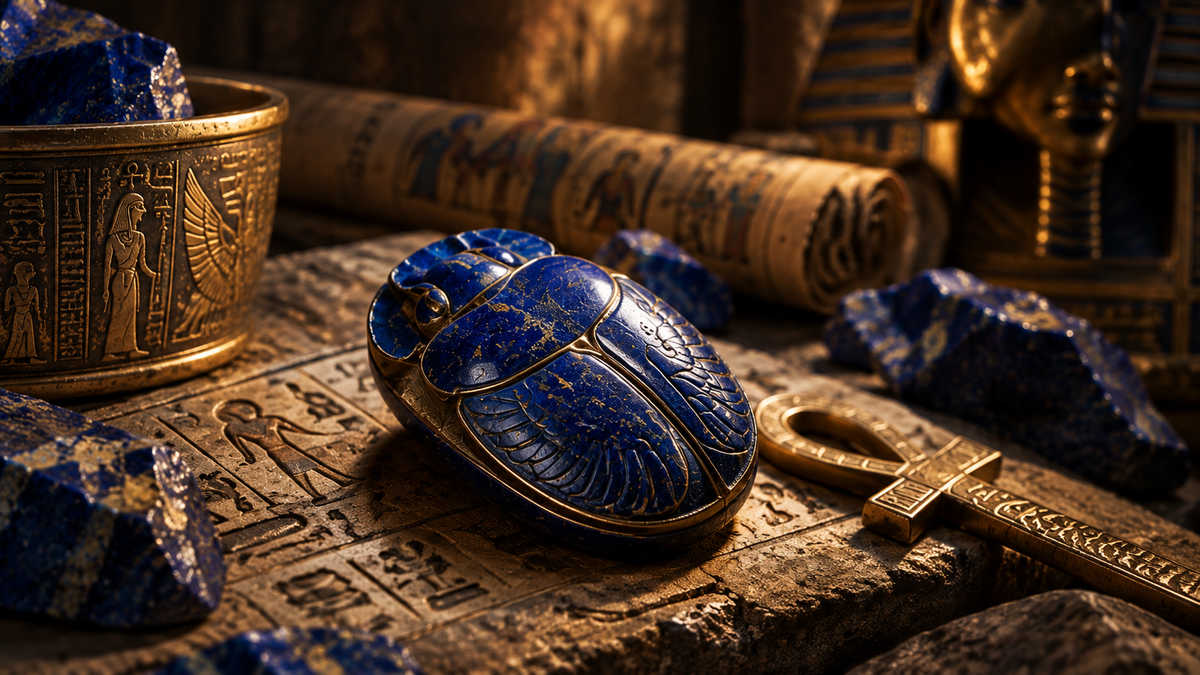


For more than 7,500 years, the intense celestial blue of Lapis Lazuli has fascinated civilizations across the ancient world. In ancient Egypt, it was treasured for jewellery, amulets and royal ornaments, with its blue colour becoming closely associated with the heavens, wisdom and divine authority.
Linked with the Throat and Third Eye Chakras, Lapis Lazuli is believed to encourage truth, confident expression and clearer thought. It represents the confidence to speak honestly, trust your judgement and communicate with purpose.
Its long association with rulers, scholars and spiritual traditions has also made Lapis a symbol of wisdom, integrity and calm authority — strength expressed through knowledge rather than force.
Associated with: Wisdom • Truth • Confidence • Clarity • Communication • Intuition • Integrity • Inner Strength
Care: Lapis Lazuli should be treated gently. Clean with a soft, slightly damp cloth and avoid prolonged soaking, acids, perfumes, harsh chemicals, high heat, steam and ultrasonic cleaners.
* These meanings are based on traditional and metaphysical beliefs.
Lapis Lazuli is a Semi-Gemstone
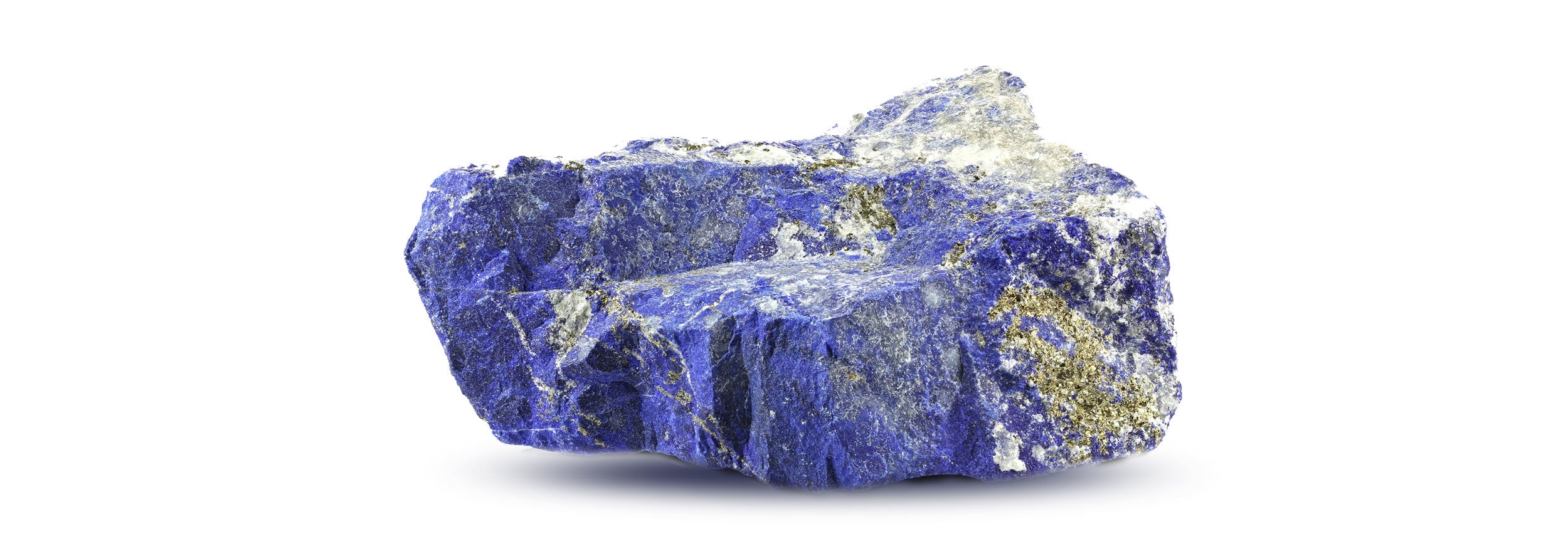
Lapis Lazuli is a semi-precious gemstone and, geologically, a rock rather than a single mineral. It is typically composed mainly of Lazurite, Calcite, Pyrite and Sodalite, with Lazurite responsible for its distinctive deep blue colour and Pyrite often appearing as fine golden flecks.
The name Lapis Lazuli comes from the Latin lapis, meaning “stone,” and the Persian lāzhward, referring to its characteristic blue colour. It is one of the oldest gemstones used by mankind and has been treasured for thousands of years in jewellery, carvings, ornaments and ceremonial objects.
Fine-quality Lapis Lazuli is prized for its rich, even blue colour, particularly when it contains minimal white Calcite and attractive, finely dispersed Pyrite. Material from Badakhshan, Afghanistan, has historically been among the most celebrated.
With a hardness of approximately 5–5.5 on the Mohs scale, Lapis Lazuli is suitable for jewellery but should be protected from scratches, chemicals and hard impacts.
Mohs Hardness: 5–5.5
Rock Type: Metamorphic Rock
Main Minerals: Lazurite, Calcite, Pyrite and Sodalite
Transparency: Opaque
Lustre: Dull to vitreous when polished
Colours: Deep blue, royal blue and blue-violet, often with white Calcite and golden Pyrite
Distinctive Feature: Rich blue body with natural golden Pyrite flecks
Major Sources: Afghanistan, Chile, Russia, Pakistan.