



Pixiu (貔貅), also known in some traditions as Tian Lu (天禄), is an ancient Chinese mythical creature often described as a majestic winged lion with powerful fangs, the horns of a dragon and the commanding presence of a celestial guardian.
According to one legend, Pixiu was one of the Nine Sons of the Dragon King, born with extraordinary strength and the ability to travel freely between heaven and earth. Unlike ordinary creatures, Pixiu possessed an insatiable appetite for gold, silver and precious treasures. Wherever wealth could be found, Pixiu was said to seek it out, often depicted with gold held proudly in its mouth.
The legend continues that Pixiu had one unusual trait — once treasure entered its body, it could never leave. Because of this, it became a powerful symbol of gathering wealth and preventing fortune from escaping, a belief that remains closely associated with Pixiu in Feng Shui today.
But Pixiu was more than a creature of wealth. Its fierce appearance and celestial origins also made it a formidable protector against evil spirits and negative forces. It was believed to patrol the boundaries between the human and spiritual worlds, driving away harmful energy while guarding the people and treasures placed under its protection.
In ancient China, Pixiu became closely associated with imperial power and was sometimes referred to as the Emperor’s Treasure (帝宝), reflecting its legendary role in protecting the wealth and fortune of emperors. Images of powerful guardian creatures inspired by Pixiu and other celestial beasts were placed around palaces, important halls and sacred buildings as symbols of protection and authority.
Over time, Pixiu came to represent a rare combination of wealth, protection, courage and loyalty. Its mythology reflects the belief that prosperity should not only be attracted, but also guarded, preserved and carried forward with strength.
Today, Pixiu remains one of the most recognised mythical guardians in Chinese culture — a symbol of abundance, protection and the determination to hold firmly to one’s fortune and path.
* These meanings are based on traditional and metaphysical beliefs.
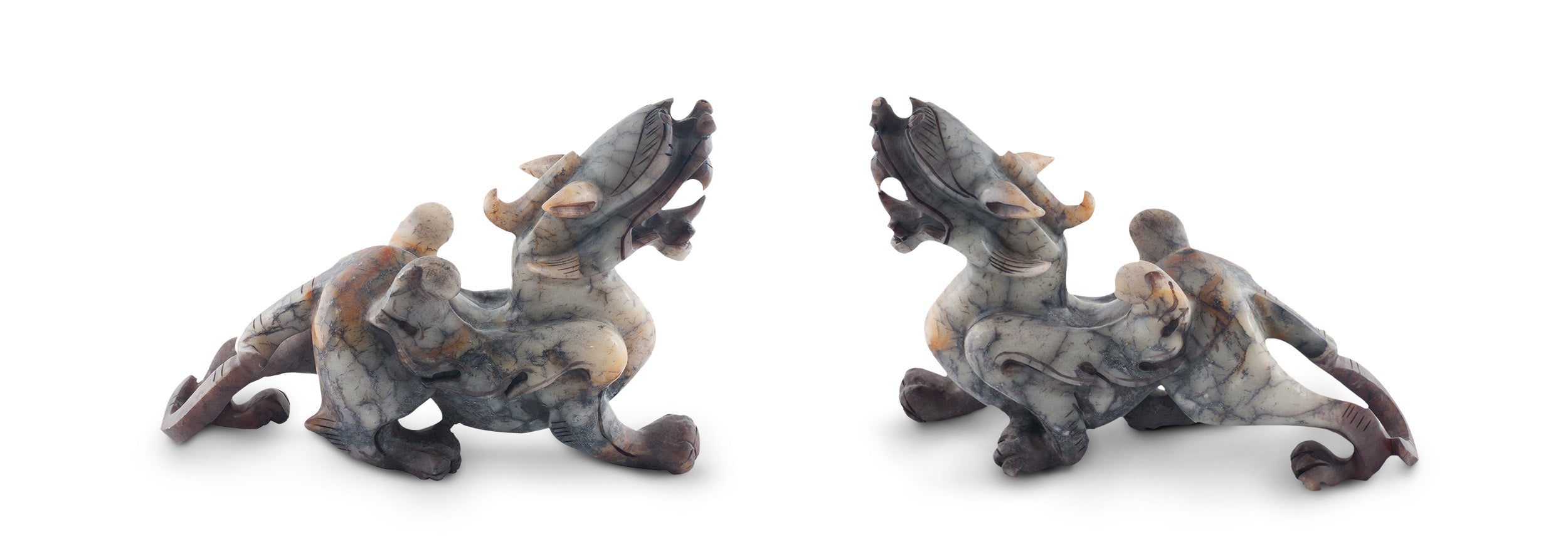
Myth about Pixiu's Diet
It was said that Pixiu once violated a law of Heaven. It soiled the floor of Heaven and was punished by the Jade Emperor. The furious Jade Emperor spanked the Pixiu so hard that it caused its rear end to be permanently sealed. The Jade Emperor further declared that the diet of the Pixiu would be restricted to gold, silver and jewels. This is why Pixiu eats gold, silver and jewels but cannot discharge it. This is one of the origins of Pixiu statues as a symbol of the acquisition and preservation of wealth(只进不出、招财不漏)— meaning that wealth enters, but does not escape. Traditionally to the Chinese, Pixiu has always been regarded as an auspicious creature with mystical powers capable of drawing Wealth (Cai-Qi; 財氣) from all directions. Pixiu is also considered as a protector (辟邪) warding off evil spirits. It has the ability to aid anyone who is going through some troubles from bad Feng Shui (in their particular year) due to have offended the Grand Duke Jupiter also known as Tai Sui (太岁).